Everyday habits
Digital Eye Strain: A Practical Guide That Isn't Just '20-20-20'
By Healthy Vision Center editorial team · Published April 28, 2026 · Updated July 30, 2026 · 6 min read

Most screen-related discomfort comes from reduced blinking, sustained near focus and workstation setup, not from the screen emitting something harmful.
What is actually happening
- Blink rate drops substantially during concentrated screen work, so the tear film breaks up and eyes feel dry and gritty.
- Focusing muscles hold a near position for hours without a break, which produces an ache and slow refocusing.
- Glare, low contrast text, and screens positioned too high force awkward posture and wider eyelid opening.
Adjustments worth making
- Break up sustained near focus regularly by looking at something far away for a few seconds.
- Put the top of the screen at or slightly below eye level so your lids sit lower and the eye surface dries more slowly.
- Raise text size instead of leaning in; leaning in shortens working distance and increases focusing effort.
- Control glare with window position and matte surfaces before buying filters.
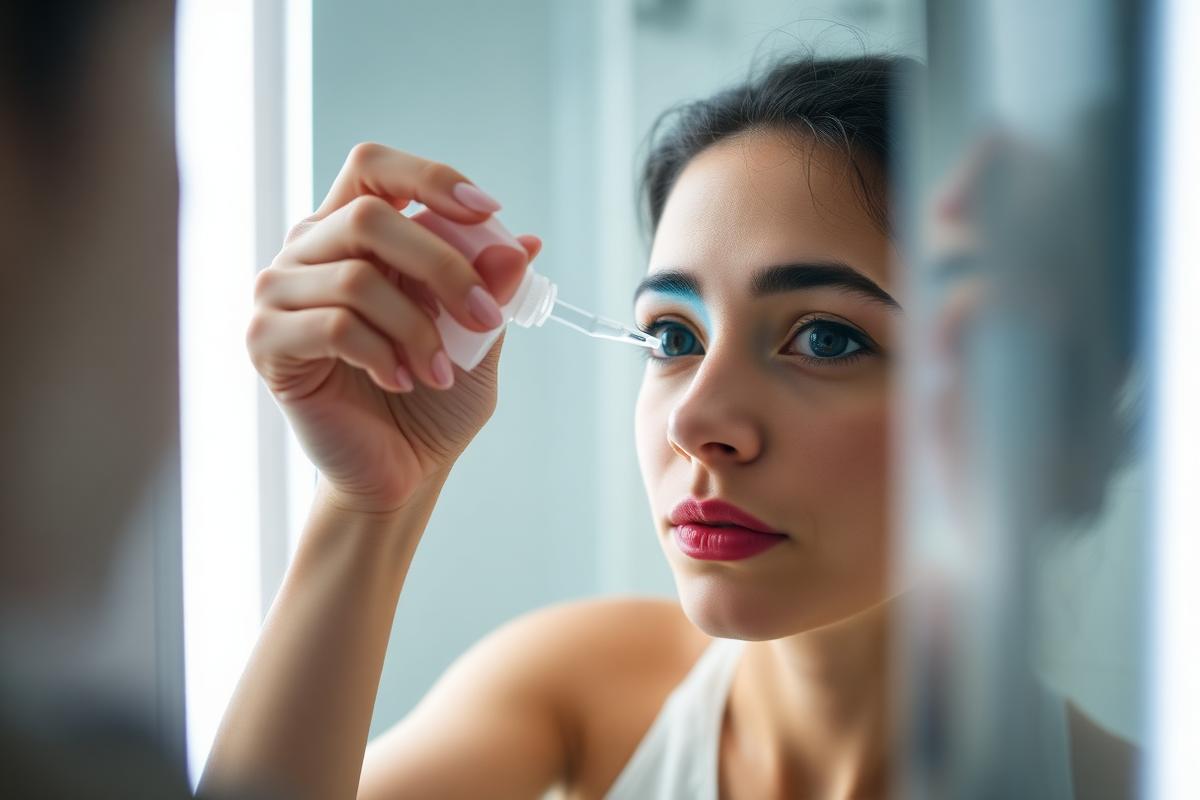
- Consider a humidifier in dry rooms, and ask a clinician about lubricating drops if dryness persists.
About blue light glasses
Controlled trials to date have not shown a consistent benefit of blue-light-filtering lenses for eye strain symptoms. That does not mean nobody finds them comfortable, only that the evidence for the specific claim is weak.
When to get it checked
Persistent headaches, double vision, eye pain, or symptoms that continue after workstation changes deserve a professional eye exam. An uncorrected prescription is a very common cause of what people label as screen strain.
Sources referenced
- Cochrane review of blue-light filtering lenses — Cochrane Library
- American Academy of Ophthalmology guidance on computer use — aao.org
Reviewed against published clinical guidance. See our editorial policy.
Keep reading
Everyday habits
A Daily Routine for Dry, Gritty Eyes That Costs Almost Nothing
Warm compresses, lid hygiene, blink training and environment tweaks: a practical dry eye routine built from the measures with the best support.
August 30, 2026 · 6 min read

Research explained
Childhood Myopia: What Outdoor Time Research Actually Shows
Short-sightedness in children is rising worldwide. Outdoor time has some of the most consistent evidence for slowing onset, and here is the detail.
August 29, 2026 · 7 min read