Nutrients
Omega-3s and Dry Eye: Where the Evidence Landed
By Healthy Vision Center editorial team · Published August 24, 2026 · Updated August 24, 2026 · 7 min read
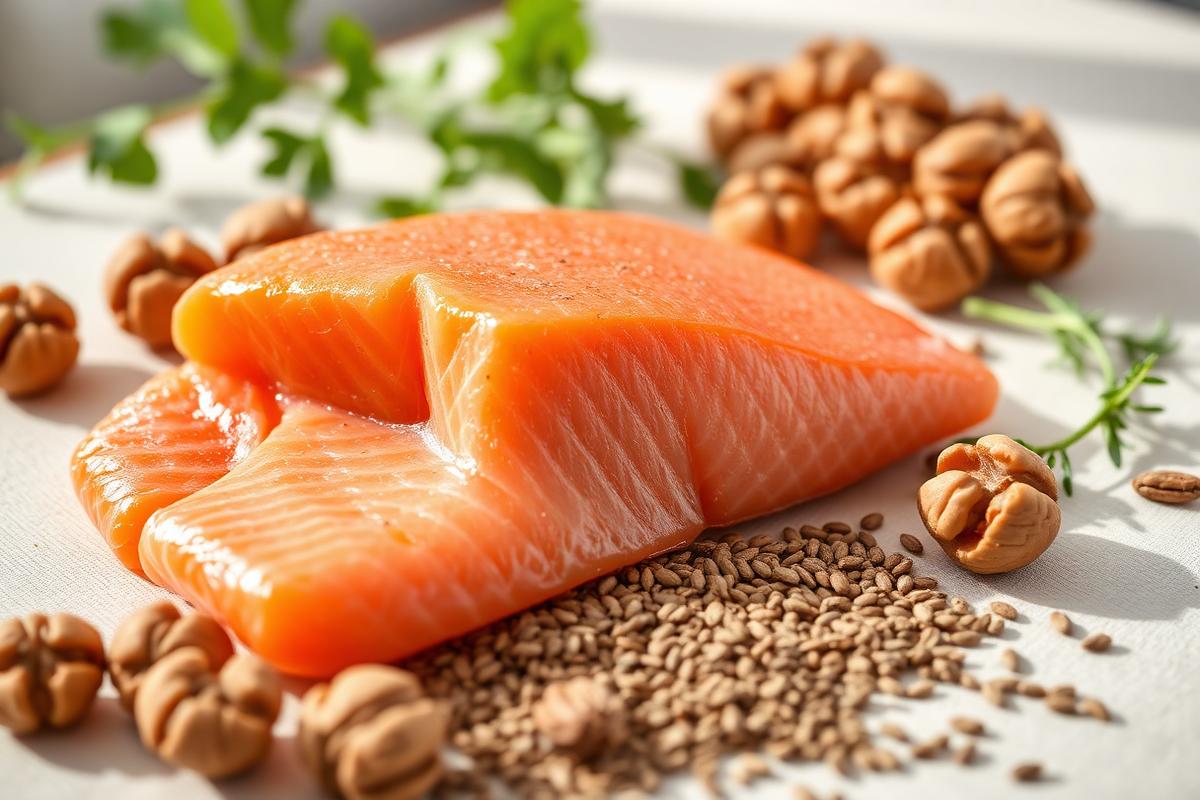
Omega-3 fatty acids were expected to be a straightforward answer for dry eye. The best-designed trial complicated that story, and the nuance is worth understanding.
The theory behind the recommendation
The tear film depends on an oily layer produced by the meibomian glands along the eyelid margin. When that layer is poor, tears evaporate quickly and eyes feel dry, gritty and tired by afternoon.
Omega-3 fatty acids influence inflammatory signalling and the composition of oils the body produces, which is why clinicians hypothesised they might improve tear film stability.
What the large trial found
The DREAM trial, a large randomized study in the United States, compared omega-3 supplementation against an olive oil placebo in people with moderate to severe dry eye. Both groups improved, and the difference between them was not statistically significant.
Smaller earlier studies had shown benefit, which is a common pattern: small trials overstate effects, larger and more rigorous trials shrink them.
What still seems reasonable
- Eating oily fish a couple of times a week supports general health regardless of what it does for tear film.
- Warm compresses and lid hygiene have more consistent support for evaporative dry eye than any capsule.
- Preservative-free lubricating drops remain the practical first-line comfort measure for most people.
- If you take blood thinners, talk to a clinician before adding high-dose fish oil.
The honest summary
Omega-3s are not a proven dry eye treatment. They may be a sensible part of a diet, but if your eyes are persistently uncomfortable, the higher-value step is an eye exam that identifies which type of dry eye you actually have.
Sources referenced
- DREAM Study Research Group, n-3 fatty acid supplementation for dry eye — NEJM
- TFOS DEWS II management and therapy report — The Ocular Surface
Reviewed against published clinical guidance. See our editorial policy.
Keep reading
Everyday habits
A Daily Routine for Dry, Gritty Eyes That Costs Almost Nothing
Warm compresses, lid hygiene, blink training and environment tweaks: a practical dry eye routine built from the measures with the best support.
August 30, 2026 · 6 min read

Research explained
Childhood Myopia: What Outdoor Time Research Actually Shows
Short-sightedness in children is rising worldwide. Outdoor time has some of the most consistent evidence for slowing onset, and here is the detail.
August 29, 2026 · 7 min read